
01
Sales
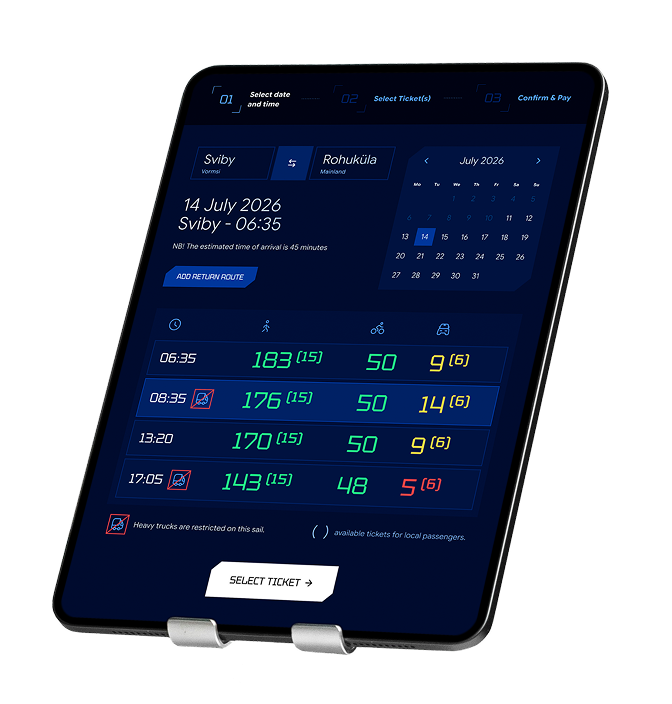
One booking flow across three channels: a passenger website, a dedicated interface for travel agencies, and onboard sales of goods and services.

Manage everything from online booking to boarding validation — for passengers, vehicles, and cargo.
HAPPYCUSTOMERS







BORA Systems is a ferry operations platform built in Tallinn, Estonia. It brings 33 modules into one system — six at its core: sales, inventory, pricing, payment, GDS and reporting — covering everything a ferry operator runs, from the first web booking to the closing of the ramp.
BORA is ISO/IEC 27001 certified, GDPR-compliant, and runs in the cloud — on all major providers (AWS, Google Cloud, Microsoft Azure) — or on-premise. As of 2026, operators in the Baltic, the Channel Islands, and the Persian Gulf use it in daily service.

From the ticket desk on the shore to the captain on the bridge, every role in your operation gets the tools it needs — booking, boarding, ticket validation, on-board sales, online-payments, and control in one connected system.
STOP 01 — BROWSER
Passengers book seats, vehicles, cabins, meals and other add-ons in one online purchase.
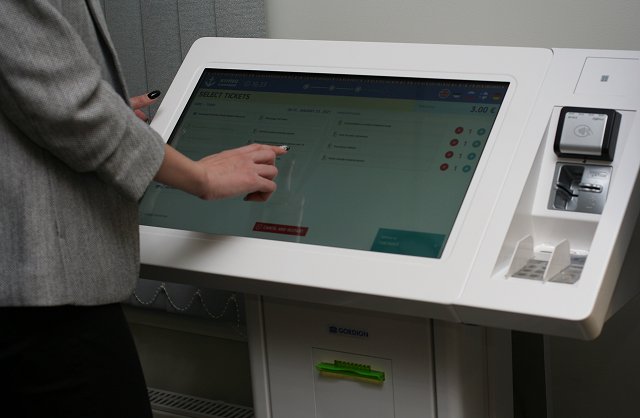
STOP 02 — TERMINAL
Self-service ticketing — passengers buy, rebook and manage loyalty without a queue.
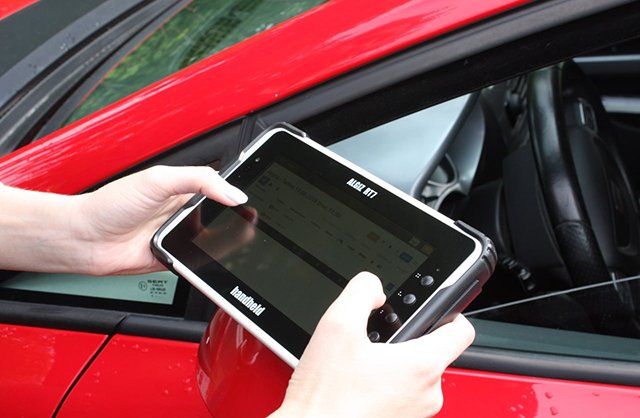
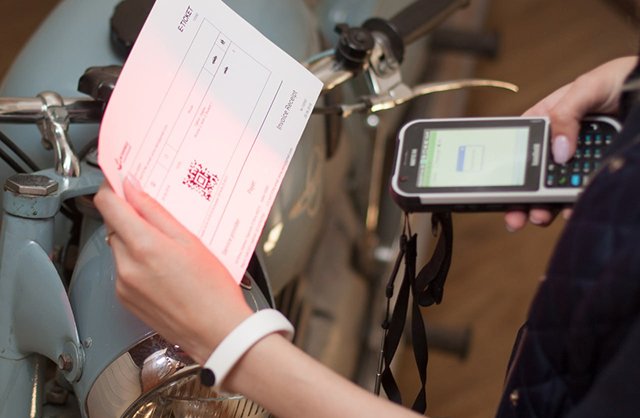
STOP 03 — LANE
Cameras reading vehicule licence plate and handheld scanners validate every passenger at boarding — fully functional offline.
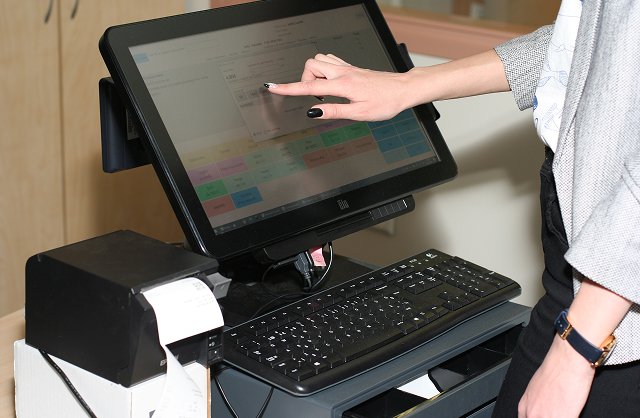
STOP 04 — ON BOARD
Tickets and goods sold underway — fully functional offline — settled into the same ledger as every other sale.
implementation time
passengers served
uptime
years in operation
vehicles carried
Hardware already in service — at the terminal, on the ramp, and on board.
Each module runs on its own service with a local API, so a ferry operator can adopt what it needs and connect the rest to systems it already has.
One booking flow across three channels: a passenger website, a dedicated interface for travel agencies, and onboard sales of goods and services.
Configure vessel, passenger and car decks, weight capacity, and boarding limits. Every vessel in the fleet is described once and used everywhere in the system.
Set rates for deck spaces, cabins, and services. Prices change by route, date, season, and vehicle class without touching the schedule or reissuing tickets.
Online banking, credit cards, cash, Apple Pay, Google Pay, and agency tickets. Every method settles into the same ledger automatically, whether taken at the port or at sea.
Plug ferry ticket sales into maps, travel apps, and third-party booking platforms without extra integration work. One connection covers every sales channel you need, now and later.
Passenger volumes, vehicle counts, revenue by route and season — all tracked automatically. Figures are drawn directly from live operations, not exported and merged by hand.
From lifeline island routes to major port groups — across the Baltic, the Channel Islands, and the Persian Gulf.
Panama. Cargo Ro-Pax — 200 passengers, 94 cabins and 1,925 lane-metres of freight, run in Spanish.
passengers
cabins
lane-metres of freight
Channel Islands. Passenger and freight service to an island with no airport and no cars.
crossings in season
year-round lifeline route
passengers a year
Baltic. Passenger and vehicle ferry service between the mainland and the western islands.
scheduled sailings
routes in daily service
vehicles a year
Persian Gulf. Ports and terminals operator running passenger and cargo services.
ports on the platform
terminal operation
passengers a year
Baltic. Island lifeline operator carrying residents, vehicles and freight year-round.
scheduled sailings
routes in daily service
passengers a year
Baltic. Ferry service to Estonia's largest island, carrying passengers, cars and freight.
peak-season crossings
vessels in the fleet
Estonian islands inter-connected
Twenty-five people in Tallinn — product, business analysis, engineering, QA, infrastructure, design and support. One team runs the platform end to end.
Microservices architecture, cloud or on-premise. Every module exposes a local API,, so the system connects to what a ferry operator already runs.














A dedicated module for each function, with an adaptable data model and a local API. Configuration replaces rebuilds.
Local banks, global payment systems, booking engines for restaurants and hotels, CRM and ERP — one open API reaches all of it.
Loyalty programs, government services, whatever comes next. New modules attach to the same core without disturbing what runs today.
Every module exposes a local API. Connect your stack, your agents, or your own tools — nothing about BORA is locked behind a UI.
Find ferry routes and sailings, create a reservation, and get its confirmation and payment link — BORA as tools any MCP-compatible AI agent can call directly, no middleware.
Full read/write access to schedules, bookings, and inventory. Build custom flows or plug BORA into systems you already run.
Trained on your fleet configuration. Answers operator questions instantly, escalates what it can't resolve to your team.

GDPR-compliant. Passenger data is processed under European regulation, on infrastructure you choose — cloud or your own servers.

ISO/IEC 27001 certified — information security management built into the process, not bolted on.

Access control is built to the requirements of the International vessel and Port Facility Security Code — adopted by the IMO in 2002 and in force since 2004.
Passenger and payment data sit at the centre of the system, so security is built into it — not added at the edges.
Customer data is fully encrypted in storage and in transit.
Only authorised personnel reach sensitive systems and information.
Security is integrated into every stage of development, not bolted on at the end.
Regular audits and penetration tests by trusted third parties.
Aligned with GDPR and ISO/IEC 27001 requirements.
Cloud-agnostic — built on secure, resilient environments with advanced safeguards.
Continuous monitoring and rapid response to potential security events.
Regular, secure backups keep data safe and recoverable.
BORA Systems is a ferry operations platform built in Tallinn, Estonia. It runs booking, pricing, boarding validation, payments, onboard security, and reporting for passenger and vehicle ferry operators.
Yes. Passenger and car decks, weight capacity and boarding limits are described per vessel, and cameras at the gate measure each vehicle, assign a deck and open the lane without staff at the barrier.
Yes. Every module exposes a local API, so the system connects to what a ferry operator already runs — CRM and ERP, local banks and global payment systems, booking engines for restaurants and hotels.
Yes. The architecture is microservices, cloud or on-premise, and the choice is yours — including where passenger data is processed.
We don't publish a figure here yet. It depends on how many modules you adopt and what has to be connected to systems you already run, and a number that ignores both would be a number we couldn't stand behind. Ask us on a walkthrough and we'll give you a range for your operation.
Online banking, cash, Apple Pay, Google Pay, and agency tickets. Every method settles into the same ledger automatically, whether the sale was taken at the port or at sea.
Yes. Each module runs on its own service with a local API, so a ferry operator can adopt what it needs and connect the rest to systems it already has.
Yes. Access control is built to the requirements of the International vessel and Port Facility Security Code.
BORA is ISO/IEC 27001 certified and GDPR-compliant, and access control is built to the ISPS code. Passenger data is processed under European regulation, on infrastructure you choose.
Operators in the Baltic, the Channel Islands and the Persian Gulf run it in daily service — from lifeline island routes to major port groups. Our clients are named in "Trusted by ferry operators" above.
There's no list price on this page, and we'd rather say so than publish one that wouldn't apply to you. Pricing follows the modules you take and the size of the operation running them. We'll quote against your routes and fleet.
Yes. Handheld scanners validate every passenger at the ramp fully offline, and reconcile once the link is back.
See it on live data — a 30-minute walkthrough, from a web booking to the ramp closing.
Akadeemia tee 15a, 12618 Tallinn, Estonia
 Product owner / managing director